Introduction to Kava Tea and Its Growing Popularity
What Is Kava Tea?
Kava tea is a traditional herbal drink made from the root of the kava plant, widely known for its calming and relaxing properties. In recent years, interest in how to make kava tea at home has grown rapidly in the USA as people look for natural, non-alcoholic beverages to unwind. Unlike common teas, kava tea does not rely on leaves. It uses ground root or powder mixed with water, making preparation unique and culturally significant.
Many beginners search for How to make kava tea from powder because it is more accessible than raw roots. Others prefer learning how to make kava from the root to follow traditional preparation methods. Both approaches are effective when done correctly.
Kava Tea vs Kahwa Tea
Although often confused, kava tea and Kahwa tea are entirely different.
Key Differences
- Kava tea focuses on relaxation and stress relief
- Kahwa tea is a spiced green tea known for warmth and digestion
- Kashmiri Kahwa ingredients include saffron, cardamom, almonds
- Kava uses root or powder, while Kahwa tea uses tea leaves and spices
Why Americans Are Interested in Kava
- Natural alternative to synthetic relaxants
- Easy methods such as How to make kava without strainer
- Customizable strength options like How to make kava stronger
Understanding these basics helps set the foundation before learning How to make kava powder at home and advanced preparation methods in the next sections.
Ingredients and Tools Needed to Make Kava Tea at Home
Essential Ingredients for Kava Tea
Before learning how to make kava tea at home, it is important to understand the basic ingredients. Kava tea relies on simplicity, but ingredient quality directly affects taste and strength.
Core Ingredients
- Kava root or kava powder
- Cold or room temperature water
- Optional healthy fats like coconut milk or almond milk
If you want to prepare from scratch, learning how to make kava powder at home starts with dried kava root that is finely ground. For convenience, many people prefer to make kava tea from powder, which is faster and widely available in the USA.
Tools Required for Preparation
Traditional tools are helpful but not always necessary.
Common Tools
- Large mixing bowl
- Strainer bag, muslin cloth, or cheesecloth
- Measuring cups or spoons
Alternative Tools
- Blender for faster extraction
- Fine kitchen towel for learning how to make kava without a strainer
Comparison: Root vs Powder Preparation
Kava Root
- Used when learning how to make kava from the root
- Stronger traditional experience
- Requires grinding and more preparation time
Kava Powder
- Ideal for beginners
- Easier dosage control
- Faster results
Choosing the right ingredients and tools ensures better results and helps when adjusting techniques, like how to make kava stronger in later steps.
Step-by-Step Guide on How to Make Kava Tea at Home
Basic Method to Prepare Kava Tea
Learning how to make kava tea at home is simple when you follow the correct process. The key is gentle extraction, as heat can reduce effectiveness. This method works for both beginners and experienced users.
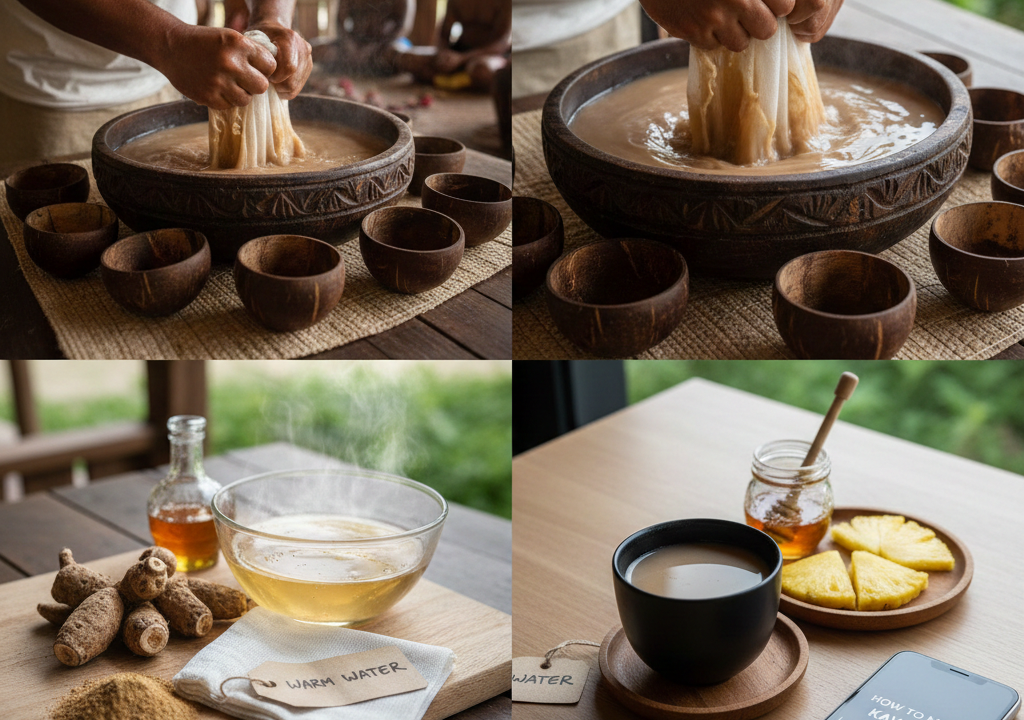
Step-by-Step Instructions
- Measure 1 to 2 tablespoons of kava powder per cup of water
- Place the powder in a strainer bag or cloth
- Add cold or room temperature water to a bowl
- Submerge the bag and knead continuously for 8 to 12 minutes
- Squeeze out all liquid and serve immediately
This approach is ideal for anyone searching for how to make kava tea from powder while preserving potency and flavor.
How to Make Kava Without a Strainer
If a strainer bag is unavailable, making kava without a strainer is still possible.
Alternative Method
- Mix kava powder directly into water
- Let it sit for 10 minutes
- Pour slowly into a cup, leaving sediment behind
Comparison: Traditional vs No Strainer Method
Traditional Method
- Cleaner texture
- Better taste control
- Preferred for learning how to make kava stronger
No Strainer Method
- Faster preparation
- Slightly grainy texture
- Convenient for beginners
Mastering these steps prepares you for advanced techniques, such as how to make kava from the root and flavor variations, in the next section.
How to Make Kava from Root and Powder for Better Strength
How to Make Kava from the Root at Home
Many experienced users prefer learning how to make kava from the root because it delivers a more traditional and often stronger experience. This method requires extra preparation but offers better control over freshness and potency.
Step-by-Step Root Preparation
- Start with dried noble kava root
- Cut the root into small pieces
- Grind using a blender or coffee grinder
- Sift to remove large fibers
- Store as homemade powder
This process explains how to make kava powder at home, allowing you to control quality and avoid additives.
How to Make Kava Tea from Powder
Once powdered, preparation becomes easy. How to make kava tea from powder follows the same kneading or blending method discussed earlier, but dosage accuracy is crucial.
Recommended Ratio
- 2 tablespoons of powder
- 1 cup of cold water
How to Make Kava Stronger Safely
Strength depends on technique, not heat.
Ways to Increase Strength
- Use a higher-quality root or powder
- Knead longer during extraction
- Add healthy fats like coconut milk
- Reduce water quantity slightly
These techniques answer the common question How to make kava stronger without compromising safety.
Comparison: Root vs Powder Strength
Root-Based Kava
- Fresh and potent
- More preparation time
Powder-Based Kava
- Convenient and consistent
- Easier for daily use
Understanding these differences helps users choose the best approach before exploring flavour options and cultural comparisons like Kahwa tea in the next section.
Serving Tips, Flavor Enhancers, and Cultural Variations
How to Serve Kava Tea
Once you know how to make kava tea at home, serving it properly enhances the taste and experience. Kava tea is traditionally consumed in a relaxed setting, often in one or two gulps. Cold or room temperature is ideal, as hot water may reduce potency.
Serving Tips
- Pour into small cups or bowls
- Consume slowly if new to kava effects
- Chill for a refreshing alternative
- Combine with natural sweeteners for flavor balance
Flavor Enhancers
To make kava tea more enjoyable, flavor additions are popular. They can also improve texture and strength.
Popular Enhancers
- Coconut milk or almond milk for a creamy texture
- Citrus juice to cut bitterness
- Honey or natural sweeteners for a mild taste
- Pineapple or tropical fruit juice for a refreshing kick
These adjustments also complement How to make kava stronger safely while keeping the experience pleasant.
Comparison: Kava Tea vs Kahwa Tea
Kava tea and Kahwa tea are both traditional beverages but differ in purpose and preparation.
Kava Tea
- Made from root or powder
- Relaxing and calming
- Mild, earthy taste
Kahwa Tea
- Uses Kashmiri Kahwa ingredients like saffron, cardamom, and almonds
- Energizing and aromatic
- Spiced green tea base
Understanding these cultural differences allows readers to appreciate global tea traditions while mastering how to make kava tea from powder or root.
Safety, Dosage, and U.S. Context
Understanding Kava Safety
Before learning how to make kava tea at home, it is important to understand safety considerations. Kava contains kavalactones, which promote relaxation but can affect liver function if consumed excessively. Moderation is key for beginners and regular users alike.
Safety Guidelines
- Start with 1 to 2 tablespoons of powder per serving
- Avoid mixing with alcohol or sedatives
- Limit consumption to 1–2 cups per day
- Consult a healthcare provider if you have liver conditions
These precautions help users enjoy kava while preventing side effects.
Dosage Recommendations
Proper dosage is essential when exploring how to make kava stronger without risk.
- Root-based preparation: 2 tablespoons of fresh root per cup
- Powder-based preparation: 1–2 teaspoons per cup for beginners
- Adjust kneading or blending time for the desired strength
Kava Availability and Legal Context in the USA
Kava products are widely available in the United States, including root, powder, and instant mixes. Many people also search for ” How to make kava powder at home to control quality.
Key Points
- Sold online and in health stores
- Usually unregulated but safe when used moderately
- Traditional and modern methods coexist
By following these guidelines, users can safely enjoy How to make kava tea from powder, How to make kava from root, or experiment with Flavors and strength confidently.
Variations and Alternatives to Kava Tea
Exploring Different Kava Tea Options
Once you have mastered how to make kava tea at home, experimenting with variations can enhance taste, strength, and convenience. Kava tea can be prepared in multiple ways depending on available ingredients and tools.
Instant Kava
- Pre-ground kava powder for quick preparation
- Ideal for those who want to know how to make kava tea from powder fast
- Mix with water or milk and consume immediately
Coconut Water or Almond Milk Base
- Adds natural sweetness and creaminess
- Enhances extraction slightly, supporting How to make kava stronger
- Perfect for tropical or flavored versions
Cold Steep Method
- Place kava root or powder in cold water for 12–24 hours
- Produces a milder taste and reduced bitterness
- Useful for beginners or casual consumption
Comparison: Root vs Powder Variations
| Method | Strength | Preparation Time | Texture | Flavour Adjustment |
| Root Preparation | High | Long | Smooth, traditional | Easily enhanced with fats |
| Powder Preparation | Moderate | Short | Slightly grainy | Easy to mix with juices or milk |
Kava and Cultural Connections
- Pairing kava tea with snacks or light foods enhances the experience
- For comparison, Kahwa tea uses Kashmiri Kahwa ingredients for aromatic and spiced flavor
- This encourages cultural exploration while learning how to make kava without a strainer or using traditional methods
Experimenting with these variations allows readers to personalize their kava experience while enjoying both traditional and modern approaches.
Frequently Asked Questions
1. How can I learn how to make kava tea at home effectively?
To learn how to make kava tea at home effectively, start with high-quality kava powder or root. Follow step-by-step instructions, including kneading, blending, and straining methods. Beginners should begin with small portions to understand potency and effects. Experimenting with flavor enhancers like coconut milk or citrus juice can improve taste while maintaining strength. Documenting the process helps refine personal preferences over time.
2. What is the best method for making kava powder at home?
The best method for making kava powder at home involves drying fresh kava root, then grinding it finely using a blender or coffee grinder. Sifting the ground root removes coarse fibers, leaving a smooth powder. This homemade powder allows control over quality and potency, making it perfect for daily use or traditional preparations.
3. Can I prepare how to make kava tea from powder without a strainer?
Yes, you can prepare how to make kava tea from powder without a strainer. Simply mix the powder in cold or room temperature water and let it settle for 10–15 minutes. Pour the liquid slowly into a cup, leaving sediment behind. This method is convenient for beginners and provides a quick way to enjoy kava without extra tools.
4. What are the steps for making kava without a strainer?
For how to make kava without a strainer, combine kava powder or ground root with cold water. Stir thoroughly and let it steep for 10–15 minutes. Slowly pour the liquid into your cup, leaving the sediment in the bowl. Optionally, flavor with natural sweeteners or coconut milk. This method is simple and still effective, especially for casual or on-the-go preparation.
5. How do I brew? How to make kava from the root for maximum strength?
To bre, how to make kava from root for maximum strength, start with noble kava root. Cut it into small pieces and grind finely. Knead or blend with cold water for 8–15 minutes to extract kavalactones efficiently. Adding a small amount of coconut milk can enhance potency. Strain thoroughly for a smooth, strong beverage. Longer kneading times increase the strength without using heat.
6. What makes Kahwa tea different from kava tea, and which Kashmiri Kahwa ingredients are used?
Kahwa tea differs from kava tea in purpose, ingredients, and flavor. Kahwa is a spiced green tea, often served for digestion and warmth, while kava tea is calming and relaxing. Common Kashmiri Kahwa ingredients include saffron, cardamom, almonds, cinnamon, and green tea leaves. Kava uses root or powder and focuses on herbal relaxation, whereas Kahwa provides a sweet, aromatic, and spicy taste profile.
7. How can I safely increase potency when llearning howto make kava stronger?
To safely learn how to make kava stronger, use high-quality kava root or powder and knead or blend longer to extract more kavalactones. Adjust the water-to-powder ratio carefully, and add small amounts of healthy fats like coconut milk. Start with small servings to monitor effects. Avoid heat or alcohol, as these can reduce safety or potency. This ensures maximum strength while maintaining a safe experience.

The creator of HowToMake0.com brings well-researched knowledge and practical creativity together, offering clear, step-by-step ideas and guides to turn concepts into real projects.